


The One + Seoul
Retina Clinic
Macular Degeneration —missing the right time for exams and treatment can lead to vision loss
Macular degeneration is a retinal disease that causes blurred central vision or straight lines to appear distorted.
Symptoms are often mild in the early stages, so the condition can go unnoticed for a while. However, getting an early exam and starting the right treatment can slow vision loss and lower the risk of blindness. The One Seoul Eye Clinic uses precise retinal exams, including OCT and fundus photography, to accurately diagnose macular degeneration and establish a treatment plan tailored to each patient.




Signs of macular degeneration —watch for these changes


Straight lines appear bent or broken


Central vision looks dim or blurry


The center of objects seems to disappear
Macular degeneration treatment tailored to your type,protecting your precious central vision
Treatment strategy differs completely between dry and wet macular degeneration.
Diagnosing the exact type through precise fundus and OCT exams before starting a personalized treatment plan is key to preserving vision.
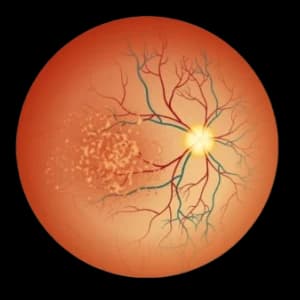
Dry Macular Degeneration Treatment
About 85–90% of casesThere is currently no fundamental cure for dry macular degeneration. Taking lutein and zeaxanthin supplements, antioxidants, and protecting your eyes from UV exposure can help minimize progression. Preventive laser treatment may be used to prevent progression to the wet type, and regular fundus and OCT exams are recommended to closely monitor the condition.
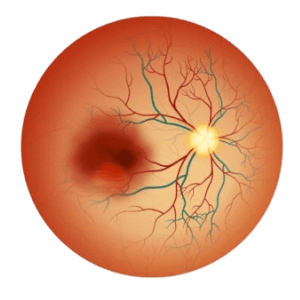
Wet Macular Degeneration Treatment
High risk of vision lossWet macular degeneration causes abnormal blood vessels to bleed and leak, rapidly reducing vision. The standard treatment is intravitreal anti-VEGF injections, which suppress abnormal vessel growth, combined with laser photocoagulation and photodynamic therapy (PDT) to preserve and restore vision. Vision can often be maintained or improved without surgery, but repeat treatment is typically needed about once a month.
Dry vs. Wet,what's the difference?
→ AREDS supplements, lifestyle management, monitoring
photodynamic therapy
Macular Degeneration with Submacular Hemorrhage — Treatment Case
A treatment case of a patient with macular degeneration who visited with about a quarter of their vision blacked out.
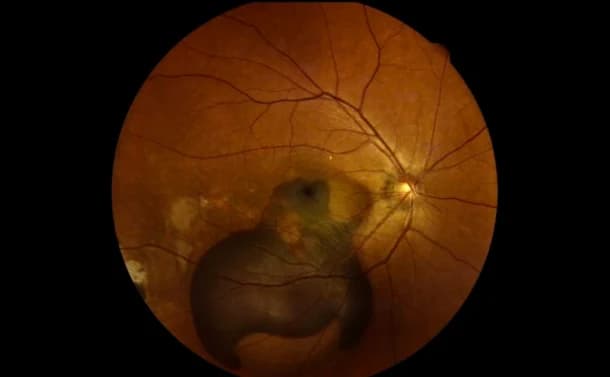
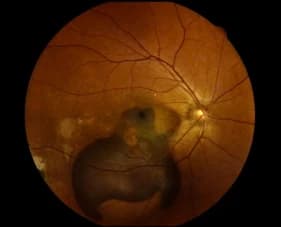 Fundus photo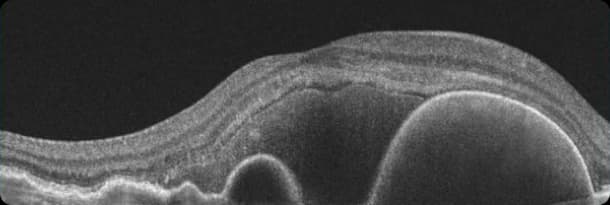
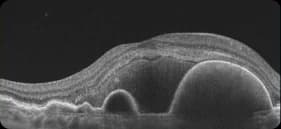 OCT
OCT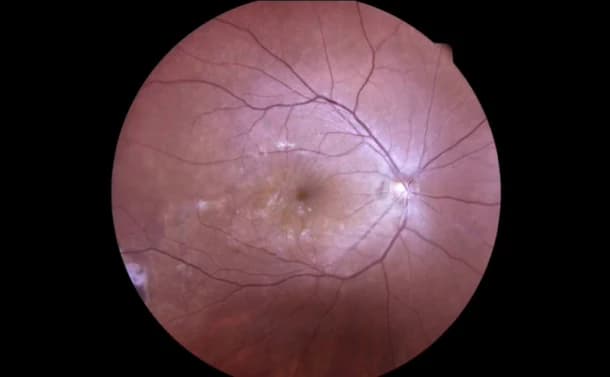
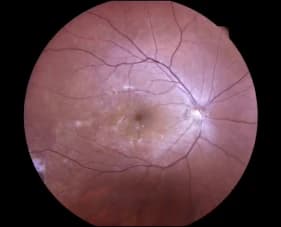 Fundus photo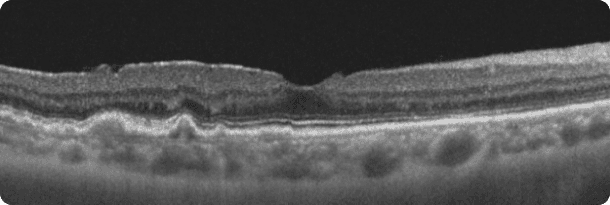
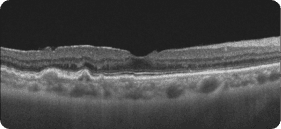 OCT
OCTBefore: 0.1 → After: 1.0
After the retinal surgery, a cataract developed and cataract surgery was performed, ultimately restoring vision to 1.0.
※ These are actual photos used with the patient's consent.
How should you
prevent macular degeneration?












Retinal Disease Self-Test


Get ready
Wearing your usual glasses or lenses,
look at the screen in a well-lit room.Keep your distance
Cover one eye and, from about 30cm away,
stare at the round dot in the center of the grid.Focus
Keep your gaze fixed on the center dot
and check how the surrounding lines appear.Check the result
Check whether any lines appear wavy or broken.
(Repeat the same test with the other eye.)
or a dot is hard to see?
This may be a sign of macular degeneration —
please visit us right away for a precise exam.

Macular DegenerationFrequently Asked Questions


What are the
early symptoms of macular degeneration?
Central vision may become blurry, straight lines may appear wavy (metamorphopsia), or a blank spot may appear at the center of letters or objects. Colors may also look duller. It helps to test each eye separately by covering the other.


Can dry macular degeneration turn into the wet type?
Yes. In some cases, dry macular degeneration can progress over time into the wet type as new blood vessels form. Even after a dry diagnosis, regular checkups and Amsler grid self-tests are important to catch any change early.


How many intravitreal injections are needed?
Wet macular degeneration is usually treated with monthly injections for the first 3 months, then the interval is extended based on progress. The number of treatments varies by patient depending on new-vessel activity and vision changes, and is decided through regular OCT exams.


Can macular degeneration be cured?
Current medicine can't fully reverse macular degeneration, but treating it at the right time can prevent vision loss and even preserve or improve vision. For the wet type especially, early treatment greatly affects the outcome, so see a doctor promptly if symptoms are suspected.