


The One + Seoul
Cataract Clinic
Unstable Vision After Cataract Surgery,IOL Dislocation
If your vision suddenly becomes blurry after cataract surgery, or you experience double vision and increased glare, the position of the intraocular lens should be checked.
IOL dislocation is a condition where the implanted lens shifts from its proper position, and accurate diagnosis
and treatment timing are important.
The One Seoul Eye Center examines not only the IOL position but also the retina, optic nerve, and intraocular pressure
to establish a treatment plan suited to each patient's condition.


Precise Position Check
Checking IOL center position and tilt
Retina & Optic Nerve Exam
Comprehensive evaluation of other causes of vision loss
Differentiating from PCO
Distinguishing simple opacity from lens position abnormality
Customized Surgery Plan
Determining refixation, replacement, or vitrectomy

What is IOL Dislocation?
The intraocular lens inserted after cataract surgery has shifted from its proper position
IOL dislocation refers to the condition where the intraocular lens inserted during cataract surgery shifts from its intended position.
The IOL is usually securely fixed within the capsular bag, but over time, the supporting tissue may weaken or be affected by trauma or eye diseases,
causing the position to shift. When the lens is slightly off-center, symptoms may not be obvious,
but as dislocation progresses, blurred vision, double vision, glare, and sudden vision loss may occur.
Particularly when the IOL has moved significantly backward or dropped into the vitreous cavity,
the retinal condition must also be examined, requiring precise diagnosis.
Why does IOL dislocationoccur?
A condition where abnormal protein
accumulates or adheres to the lens,
iris, and other structures,
which may affect
the structures supporting
the IOL.
In cases of myopia,
structural characteristics of the eye
may cause the IOL position
to become unstable.
If there is a history of
previous eye surgery, structural
changesin the eye may lead to
IOL dislocation.
After an eye impact
or external shock,
the IOL position
may change.
How is it different from posterior capsule opacification?
Both can cause blurred vision
after cataract surgery,
but the causes and treatments differ
dislocation means the lens itself has shifted from its position.
Therefore, the two conditions must be accurately distinguished
through examination, and treatment methods differ.
PCO may generally be treated by opening the cloudy posterior capsule with a laser,
while IOL dislocation may require
refixation or replacement surgery depending on the degree of position abnormality.
IOL dislocation treatmentvaries by severity
The treatment method is determined after
assessing the degree of displacement
and eye condition
The treatment for IOL dislocation may vary depending on the degree
of displacement and accompanying conditions.
After accurately examining the IOL position and the condition inside the eye,
an appropriate treatment plan is established.
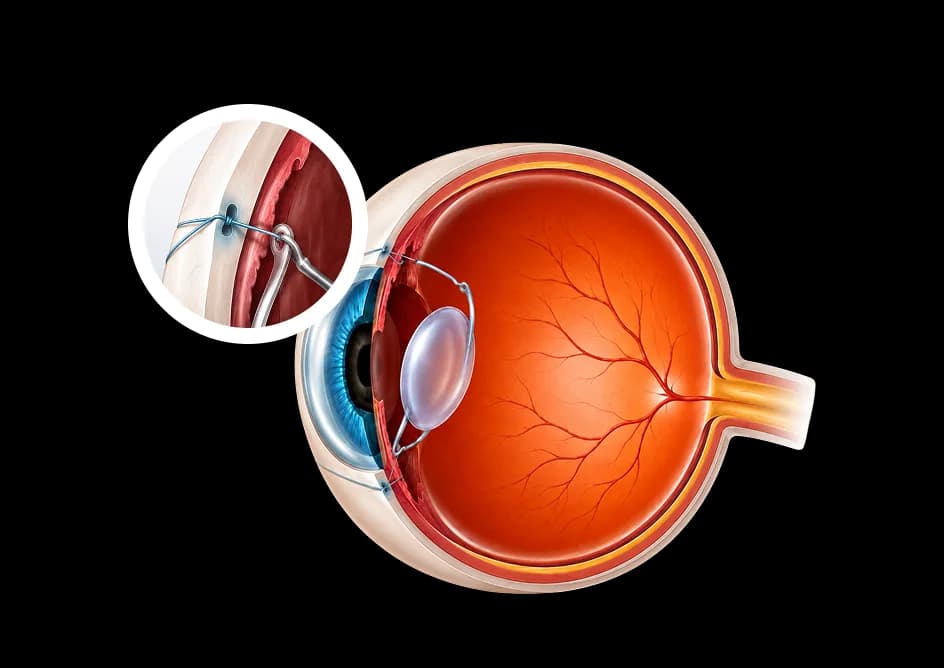
Scleral Fixation
If the lens has not completely dislocated, surgery to fix the IOL to the sclera or iris may be considered to restore it to its original position.
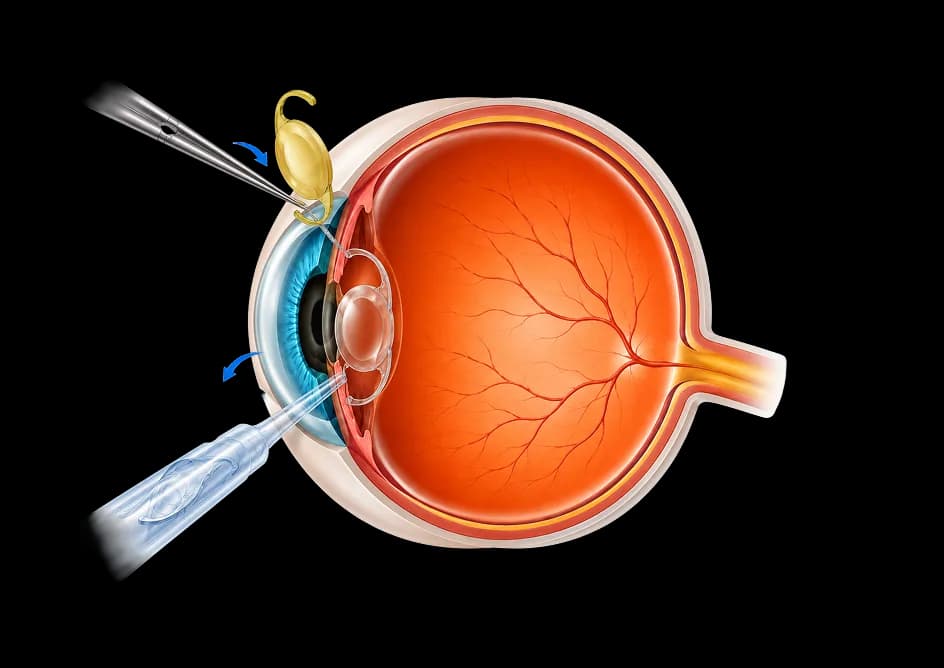
IOL Replacement
If the lens has completely dislocated or other eye conditions are present, the existing IOL may be removed and a new one inserted.
If the IOL has shifted near the retina or optic nerve, retinal surgery may also be necessary.
IOL Dislocation, How does The One Seoul
Eye Center treat it?
Post-cataract surgery
visual abnormalities are examined together with the retina
but during treatment, the retina
and vitreous conditions often need to be checked as well.
Especially when the IOL has shifted backward or vision loss appears alongside retinal disease, a more precise evaluation is needed.
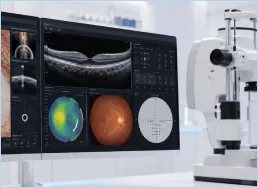
The One Seoul Eye Center comprehensively checks the IOL position along with retina, optic nerve, and intraocular pressure.
Based on this, we determine whether the patient needs observation or surgical intervention.
Precise Examination
Checking IOL position, tilt,
and center displacement

Retinal Assessment
Examining macula, retina,
and vitreous condition
Differential Diagnosis
Distinguishing from PCO,
retinal disease, glaucoma, etc.

Customized Surgery Plan
Determining refixation, replacement, scleral fixation, vitrectomy

Post-Surgery Care
Monitoring vision recovery, IOP,
inflammation, retinal status

IOL DislocationFrequently Asked Questions

Is IOL dislocation
a recurrence of cataract?
No. IOL dislocation is a condition where the
intraocular lens inserted during cataract surgery
has shifted from its position. It is not a recurrence
of cataract but visual discomfort caused by
changes in the IOL position.

Should I see a doctor immediately
if my vision suddenly blurs?
If you experience sudden vision loss, double vision,
or visual instability after cataract surgery, it is
advisable to get examined. Not only the IOL position
but also retinal and intraocular pressure conditions
should be checked.

How is IOL dislocation
treated?
Depending on the eye condition, the existing IOL
may be refixed or replaced with a new one.
If the supporting structure is insufficient or the lens
has dropped backward, scleral fixation or IOL
replacement surgery may be considered.
Can dislocation occur
long after cataract surgery?
Yes, it can occur not only immediately after surgery
but also years later. Over time, the tissue supporting
the IOL may weaken or be affected by trauma
or eye conditions.

Is surgery always required
for IOL dislocation?
Not all cases require immediate surgery.
If the dislocation is minor and visual discomfort
is not significant, observation may be possible,
but if vision loss is notable or other eye problems
are present, surgical treatment may be considered.