


The One + Seoul
Retina Clinic
Floaters — a sudden increase in dark spotsmay signal a retinal issue
If dark spots, threads, or floating specks suddenly appear in your vision, it may be simple floaters or a sign of retinal disease. Get a precise diagnosis at The One Seoul Eye Clinic's Retina Center.
Floaters can occur naturally with aging, but a sudden increase, flashes of light, or a shadow over your vision may call for a retinal exam.
What are floaters?
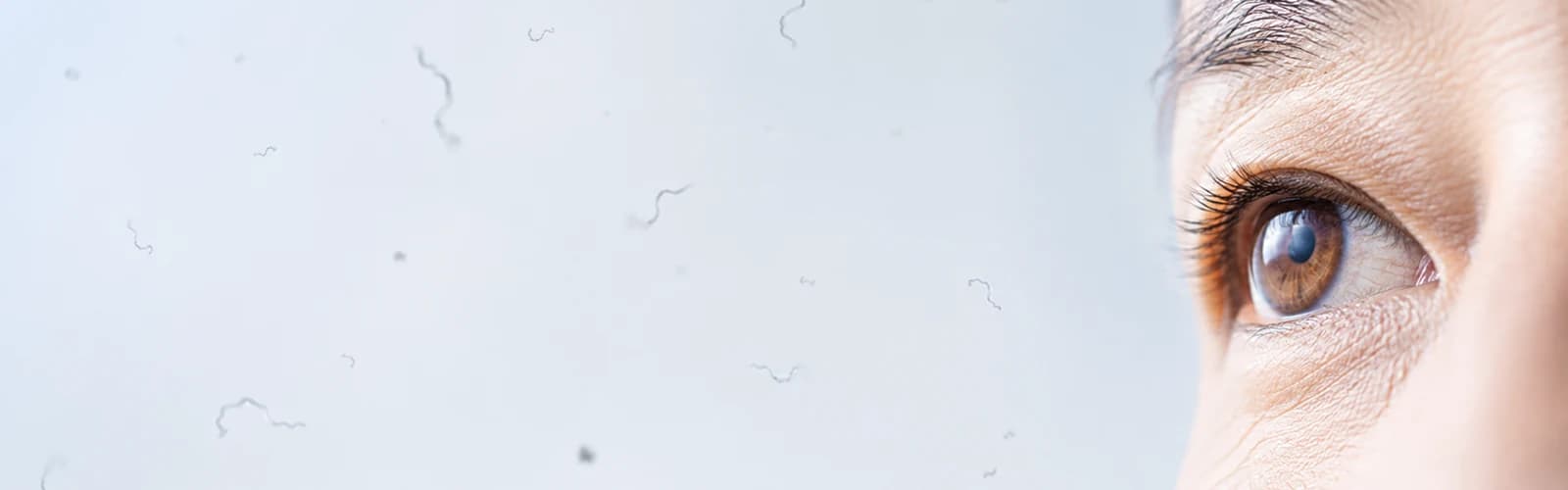
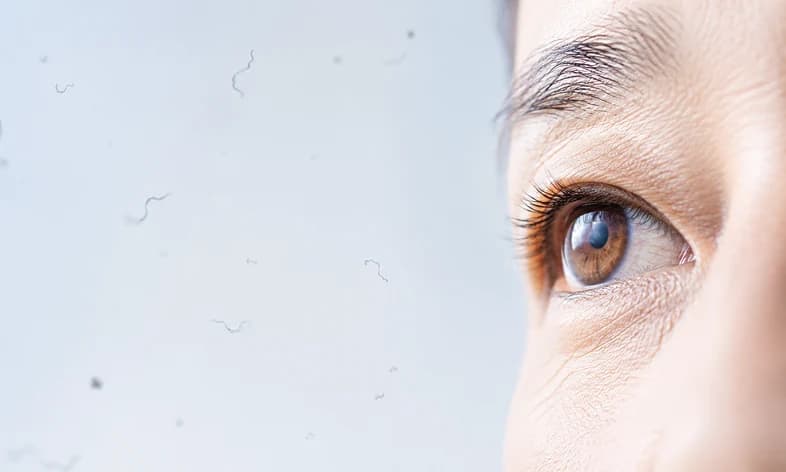
Dark spots or thread-like shapes drifting across your vision
They move along with your eye movements and tend to stand out more against bright backgrounds or the sky.
Most are caused by age-related changes in the vitreous,
but some may be linked to retinal conditions such as a retinal tear or detachment, so an accurate exam is needed.



Floaters are caused bychanges in the vitreous
Causes range from natural aging to retinal disease
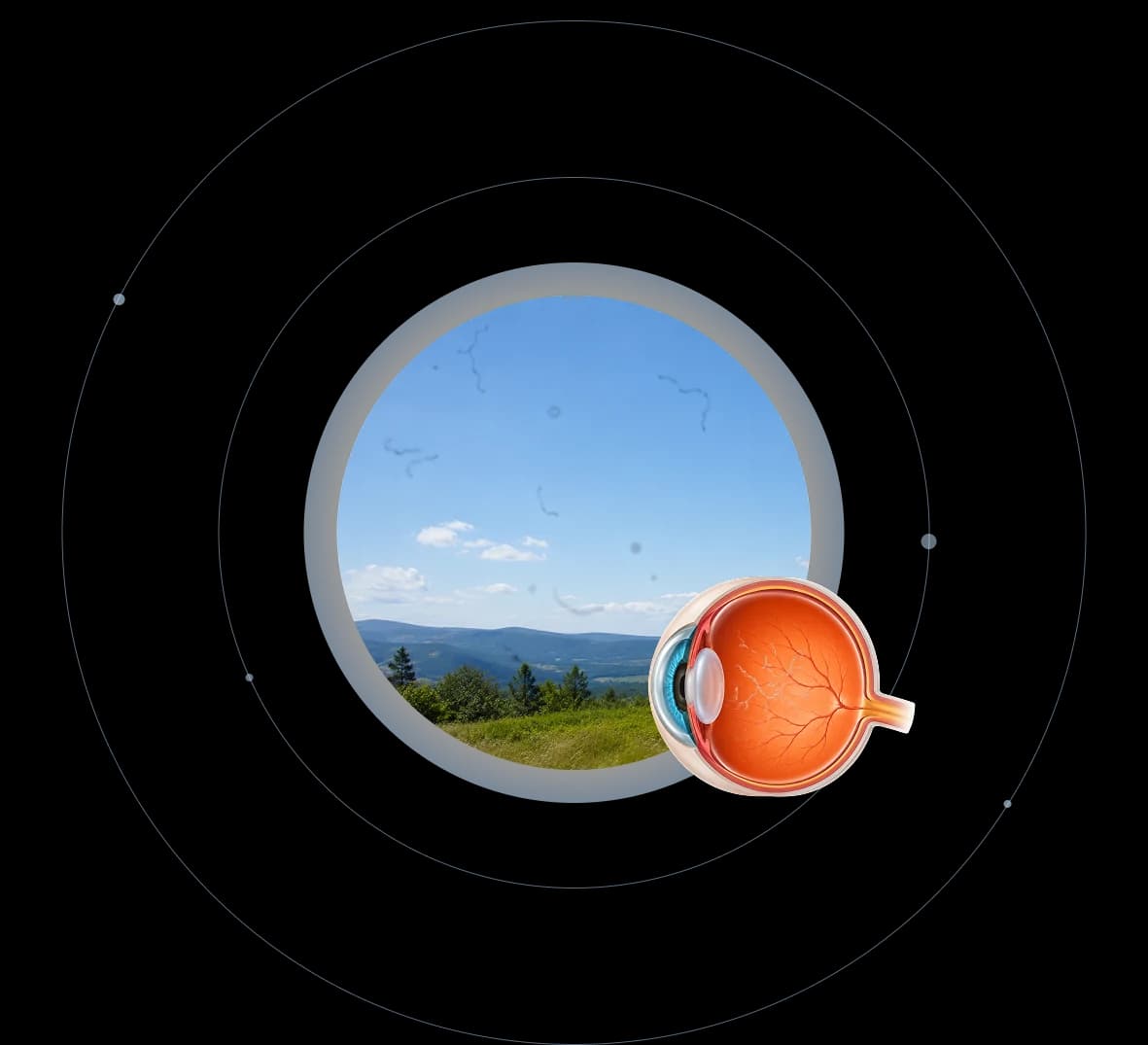
Floaters occur when the vitreous, the clear gel-like tissue that fills the eye, changes over time.
As the vitreous condenses or separates from the retina with age, the resulting shadow falls on the retina and appears as dark spots or thread-like shapes.
The most common cause, occurring from age-related vitreous changes.
Floaters can appear as the vitreous separates from the retina.
An elongated eye can accelerate vitreous changes.
A retinal tear or detachment can also cause floaters.
These floater symptomsmay call for a retinal exam
Sudden onset or a clear change in floaters needs attention
but a sudden onset or a change in symptoms should be checked for retinal disease.


More floaters
A sudden increase in dark spots,
threads, or floating specks

Flashes of light
Repeated flashes of light,
especially in dark settings

Curtain-like shadow
Part of your vision is blocked,
like a curtain coming down

Reduced vision
Blurred vision or
a sudden drop in eyesight
How are floaters diagnosed?
A precise retinal exam helps identify the cause of floaters
The One Seoul Eye Clinic performs a thorough exam to check for vitreous changes as well as retinal conditions
such as a retinal tear or detachment, and recommends the right treatment direction.
Treatment can vary depending on the cause of the floaters.

History taking & vision test
Checking when symptoms started
and how they've changed.

Intraocular pressure test
Checking basic
eye health.
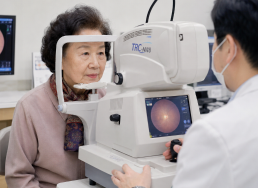
Detailed retinal exam
Precisely checking for
vitreous and retinal abnormalities.
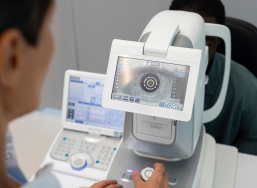
OCT retinal imaging
Checking the retina's fine
structure for abnormalities.

Diagnosis & treatment plan
Guiding the right treatment
direction based on exam results.
How are floaterstreated?
Treatment depends on
the cause and condition of your floaters
Floaters are most often caused by natural age-related changes in the vitreous,
and in most cases no specific treatment is needed.
However, if an underlying condition such as a retinal tear is found, treatment is directed at that cause.
A thorough exam determines whether it's a simple vitreous change or involves retinal disease,
and the right treatment is then carried out.

Observation
Age-related floaters are
monitored without specific treatment.
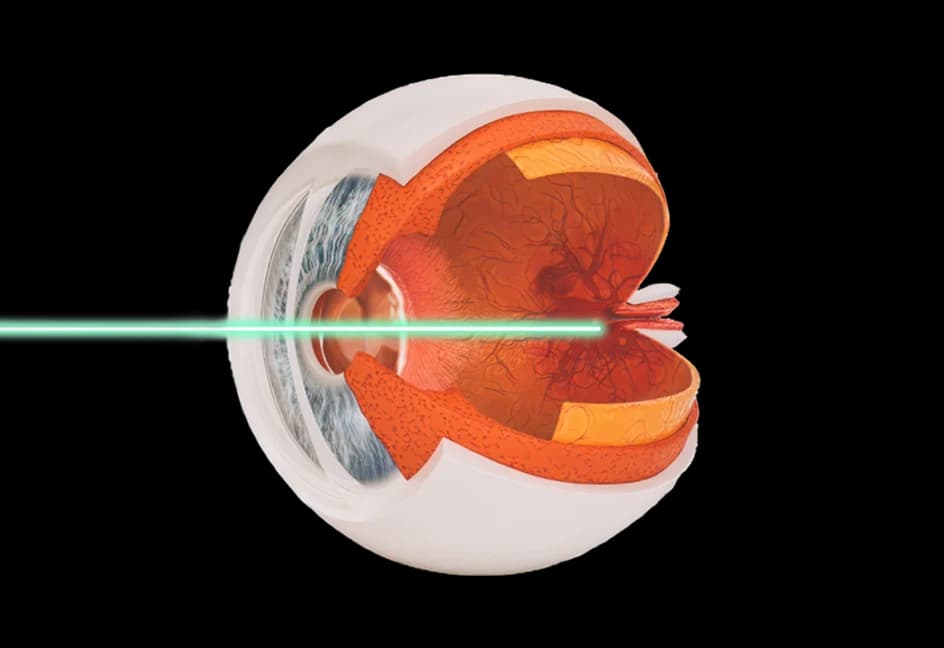
Laser Photocoagulation
If a retinal tear is found, laser photocoagulation
helps prevent progression to retinal detachment.
Why The One Seoul Eye Clinic's Retina Center?
Backed by research and clinical experience in retina care,
we accurately diagnose the cause of your floaters
The One Seoul Eye Clinic's Retina Center brings together specialists with extensive clinical experience
and research expertise to provide an accurate diagnosis and treatment.





FloatersFrequently Asked Questions


What are the
symptoms of floaters?
Floaters are dark spots, threads, cobweb-like or fly-like shapes that appear to drift across your vision. You may notice them moving along with your eye movements.

Does having floaters
always mean retinal disease?
Not every case of floaters means retinal disease. However, if they suddenly increase, or are accompanied by flashes of light, a shadow over your vision, or reduced vision, a retinal exam may be needed.


What should I do if my
floaters suddenly increase?
If your floaters suddenly increase, it's best to have your retina checked. If flashes of light or a shadow over your vision occur together, a prompt exam may be needed.


Why
do floaters occur?
Floaters mainly occur from changes in the vitreous inside the eye. Aging, posterior vitreous detachment, high myopia, a retinal tear, or retinal detachment can all be causes.


How are floaters
treated?
Treatment for floaters depends on the cause. If it's simply a vitreous change, observation may be enough; if a retinal tear or detachment is found, treatment suited to your condition is needed.